
Reliance Industries' (RIL's) consumer business is expected to lead earnings growth in the Q3FY24 performance, according to analysts. While the energy business is expected to show sequential weakness, the consumer business, especially retail, is estimated to show strong growth. The oil-to-telecom conglomerate will announce its Q3FY24 financial results on Friday.

Bajaj Auto's market capitalisation (market cap) hit Rs 2 trillion mark for the first time. The stock of the two and three-wheeler major rallied 6 per cent to hit a new high of Rs 7,420 on the BSE in Tuesday's (January 9) intraday trade after its board approved Rs 4,000 crore share buyback at Rs 10,000 per share. The stock ended the day at Rs 7,093.75, up 1.55 per cent and its market cap a shade above Rs 2 trillion.

Earnings growth trajectory for India's capital goods firms is likely to stay buoyant for the December 2023-ended quarter (Q3 FY24), said analysts. Guidance on margins, ordering activity in an election year and export-related demand would be key monitorables. Brokerages - Motilal Oswal, Nuvama, Kotak Institutional Equities and Prabhudas Lilladher - estimated revenue growth for their capital goods universe to be 11-16 per cent year-on-year (Y-o-Y).
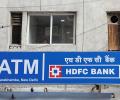
HDFC Bank's market capitalisation (market cap) touched Rs 13 trillion in Thursday's (December 28, 2023) intra-day trades as the largest private sector lender is set to report its sharpest monthly rally in the past two years. At 10:33 AM; HDFC Bank's market cap stood at Rs 13.03 trillion, the BSE data shows. The stock was up 1 per cent at Rs 1,717.90 in intra-day trades on December 29, inching towards its record high of Rs 1,757.80 touched on July 3, 2023.

Asia's richest man, Mukesh Ambani, signed off an address to employees last week by assuring them that 2024 would be better than 2023 for both Reliance Industries and India. Ambani isn't an exception. Promoters and their representatives from several other conglomerates have expressed similar optimism.

The outer structure of Navi Mumbai International Airport's first terminal building is almost ready. Exactly behind the under-construction building, stands a partially demolished hill. Executives from the airport company are now hopeful the hill will be flattened by mid-January, paving the way for the first commercial take-off by December next year.

For the company's latest energy initiative to expand its green energy and storage portfolio, some analysts are beginning to suggest a closer look at some of its segments. In his address to shareholders in the company's FY22 annual report, billionaire Mukesh Ambani, chairman and managing director of the company, said: "The green energy value holds great promise to outshine all our existing growth engines in just 5-7 years." The company has marked an investment of Rs 75,000 crore towards its new energy plans, which include solar energy value chain, green hydrogen, energy storage and other similar businesses.

74 of these fatalities were reported by 8 companies: Coal India (21), L&T (14), Vedanta (13, of which Hindustan Zinc reported 7), Tata Steel (7), Power Grid Corporation of India (7), JSW Steel (6), and ONGC (6).
India's leading capital goods and engineering firms are in the midst of one of their busiest seasons, with the combined orderbook surging past Rs 8 trillion in value. As on September 30, 2023, 13 of India's top 15 listed capital goods and engineering firms, for which data for the September 2023 quarter was available, had a total orderbook worth Rs 8.45 trillion - a number unseen at least since 2018-19. "This intuitively looks like an all-time high factoring in inflation," said Anupama Arora, a senior independent analyst who tracks the capital goods sector.

Titan Company on November 21, became the second Tata group firm to join Rs 3 trillion market capitalisation (market cap) club after its shares hit a new high of Rs 3,400, up nearly 2 per cent on the BSE in Tuesday's intra-day trade. At 12:28 PM; with a market cap of Rs 301,847 crore (Rs 3.02 trillion) Titan stood at number 16th position in overall market cap ranking on the BSE listed companies, the exchange data shows. Titan overtook paint company Asian Paints, which has a market cap of Rs 300,579 crore, data shows.

The Reserve Bank of India's (RBI's) latest order on unsecured loans is set to hit the banking sector's growth in the near-term, cautioned analysts, as they see banks slowing down on aggressive retail lending. Besides, cost of funds for non-banking finance companies (NBFC) is expected to inch up as banks will pass on higher capital charge to NBFCs. "We believe the fallout of the RBI action will be mainly on growth, given the rising dependence on unsecured retail loans and lending to NBFCs for growth.

The Reserve Bank of India's latest order prohibiting Bajaj Finance from sanctioning and disbursing loans under its 'eCOM' and 'Insta EMI Card' products may not have serious implications on the non-banking finance company's profitability, provided the ban is lifted within six to eight weeks, analysts said. "In a surprise move, the RBI has asked Bajaj Finance to stop sanction and disbursal under two of its digital lending products. "While the move is negative, the speed of correction will be key to reinstate products," global brokerage Jefferies said in a report.

India's cement demand has consistently shown double-digit growth over the past few quarters, primarily driven by infrastructure spending. However, dealers and industry executives note that state elections, festival season, and, in some markets, weddings and pollution may temporarily disrupt this demand story. While the festival season typically sees a slowdown in construction activity, some dealers anticipate this lull extending throughout the entire month as multiple states enter election mode.

'The fact still remains that we will have to deliver, so the pressure is now on us to make sure we get our resources, our supplies lined up at acceptable costs.'

Shares of Reliance Industries (RIL) traded 2 per cent higher at Rs 2,310.10 on the BSE in intra-day trade in an otherwise volatile market after the company reported a 27.4 per cent year-on-year (YoY) growth in its consolidated net profit at Rs 17,394 crore for the September quarter (Q2FY24). While revenue growth of the company was flattish YoY at Rs 2.32 trillion, the profit rose on the back of operational improvement across most segments, especially higher profits in the O2C (oil-to-chemicals) and oil & gas businesses, as well as the retail business. "Strong operational and financial contribution from all business segments has helped Reliance deliver another quarter of robust growth," said Mukesh Ambani, chairman and managing director of the company.

Capital goods companies in their Q2FY24 results are expected to report another steady quarter of earnings growth as order inflows and execution remain healthy, according to analysts. An upward revision in order inflow targets and a margin improvement due to lower raw material costs are also anticipated. "We expect the execution of all capital goods companies and most EPC (engineering, procurement, and construction) companies to remain healthy Y-o-Y (year-on-year), led by strong order book accretion in the past 5-6 quarters," wrote analysts at Kotak Securities in a note, estimating revenue growth of 32 per cent for India's largest company in the capital goods space -- Larsen & Toubro.

With another quarter of steady growth in demand, cement companies are expected to report strong year-on-year (Y-o-Y) growth in earnings, according to analysts. The September quarter (Q2FY24) also witnessed a resumption of price hikes in certain markets. UltraTech Cement, India's largest cement producer, reported a 15 per cent Y-o-Y increase in cement sales in the country for the quarter under review.

Proxy advisory firm IiAS has recommended that institutional investors should vote against the appointment of Anant Ambani on Reliance Industries Ltd's (RIL's) board, citing his age as the reason. The firm has, however, given its green light to the appointment of Anant's elder siblings - Akash and Isha. In its recommendation note, IiAS said, "At 28 years of age, his appointment as a non-executive, non-independent director does not align with our voting guidelines."
India's biggest non-bank finance company, Bajaj Finance (BAF), is set to raise capital after a gap of four years. On October 5, the board of directors will meet to approve the fund raise by way of preferential issue and/or qualified institutional placement (QIP) subject to regulatory and shareholder approvals. The move, analysts said, comes ahead of expectations, and could be in the wake of simmering competition in the consumer lending space, especially with the launch of Jio Financial Services (Jio Fin). "While we still do not have finer details on the game-plan of Jio Financial, it has plans to initially foray into consumer and merchant lending.

'To sustain our growth trajectory, we must continue to explore and capitalise on growth opportunities.'
 © 2026 Rediff.com - Investor Information - Advertise with us - Disclaimer - Privacy Policy - Sitemap - Feedback - About us - Terms of use - Grievances